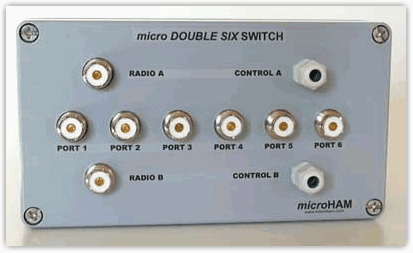
micro DOUBLE SIX SWITCH is a high performance,
high power rated, rugged, high isolation, remotely controlled antenna switch capable of selecting one
of six (6) antennas to one of two (2) feedlines for SO2R operation. It can be installed inside
the shack or outside on the tower.
Available with UHF SO-239 connectors or N connectors.
Package includes: micro
DOUBLE SIX SWITCH and double C-bolt for tower mounting.
Double Six Switch
UHF connectors
|
$649
|
|
Double Six Switch
N connectors (Special Order)
|
$739 |
|
Features:
|
• |
six (6) antenna ports - 1 to 60 MHz. |
|
• |
heavy aluminum case 4mm (158 mils) thick, IP 66 provides high level
weather protection and RF proof capabilities |
|
• |
SO239 UHF or N teflon™ / gold pin connectors used |
|
• |
10kV surge strength, 16 Amp sealed relays |
|
• |
stub compensated microstrip PCB architecture assures
lowest SWR and insertion loss from 1.8 to 60 MHz |
|
• |
built-in surge protection |
|
• |
compatible with all 12V source driver band decoders |
|
• |
connects directly to Station
Master |
|
• |
top cover screws protected against loss (very useful at tower) |
|
• |
easy wall or tower assembling thanks to
special galvanized heavy double C-bolt, which allows using various
diameter of the tower tube |
|
• |
unselected antenna ports are grounded |
|
• |
without power all antenna ports are grounded |
|
• |
each device is individually trimmed and tuned for best performance |
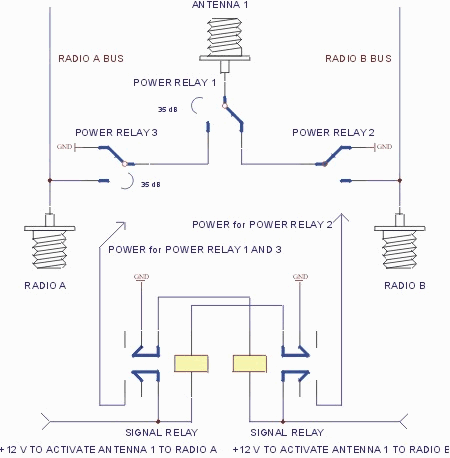
Special double fault protection
Fig. 1 Example of one port connection
A special method of
connecting relay power is employed which prevents switching both radio ports
to the same antenna. Additional signal relays ensure maximum separation even
with a drive control fault. Without this protection,the
isolation between radio ports would decrease by half. For example, with
an output power of 1000W (60 dBm), in the event of a control fault, the other
radio port would would see 25 dBm (0.3 W) instead of -10dBm = 0.0001W.
Copyright 2009 � microHAM America, LLC
webmaster :W4TV